


Gifts with a Story: How to Choose Authentic Mexican Crafts
Most of us know the moment. You're at a market stall or on a website, holding something beautiful, and nobody can answer the questions in your head. Did a person make this, or a factory? Does this gift honor whoever created it? Can it actually hold food, or is it only for show?
No single seal answers all of that. What you can learn is a way of looking, asking, and deciding. This guide gathers what we find most useful for giving Mexican crafts with confidence, without becoming a specialist and without falling for the myths.
Start with one distinction: craft versus hobby work
Both can be lovely. They just aren't the same thing. Mexico's national crafts fund, FONART, sets out the difference in its program rules (in Spanish). An artesanía is a product of shared community identity, made through continuous manual processes, generally with native raw materials. A manualidad, closer to what English speakers call a hobby craft, starts from processed or prefabricated materials, and its techniques carry no community tradition; they tend to follow trends.
FONART even has an evaluation tool for this, which looks at things like where the raw material comes from and how and how long a piece takes to make. The takeaway is simple. "Handmade" describes a method. Artesanía also speaks to a community and to inherited knowledge. A candle poured at home can be a wonderful gift without being a traditional craft, and there's nothing wrong with that. It just helps to call things what they are.
Four questions worth more than any label
Before you look at the price, try to answer these. If the seller can't answer any of them, that tells you something too.
- Who made it, and where? You don't need a famous name. A workshop, a family, a community, or even a specific town suggests the piece can be traced.
- What is it made of? Ask for the actual material: wool, cotton, clay, blown glass, which kind of wood. Vague phrases like "natural materials" don't tell you much.
- How was it made? Loom, wheel, hand-building, glassblowing, carving. People who know the craft are usually glad to explain.
- What is it really for? Display, cooking, serving, wearing. The answer decides how to care for it and, with ceramics, whether it's safe for food.
What to look for, material by material
Treat these as practical clues, not proof of authenticity. They help you look more closely and ask better questions.

Clay and ceramics
Turn the piece over. The base often says more than the decorated face: tool marks, a signature, a workshop mark. If you plan to use it, check that the glaze has no cracks or worn patches. Small differences between two pieces are normal in handwork, though they prove nothing alone. Imitations can have "flaws," and some handmade work is astonishingly precise.
Textiles
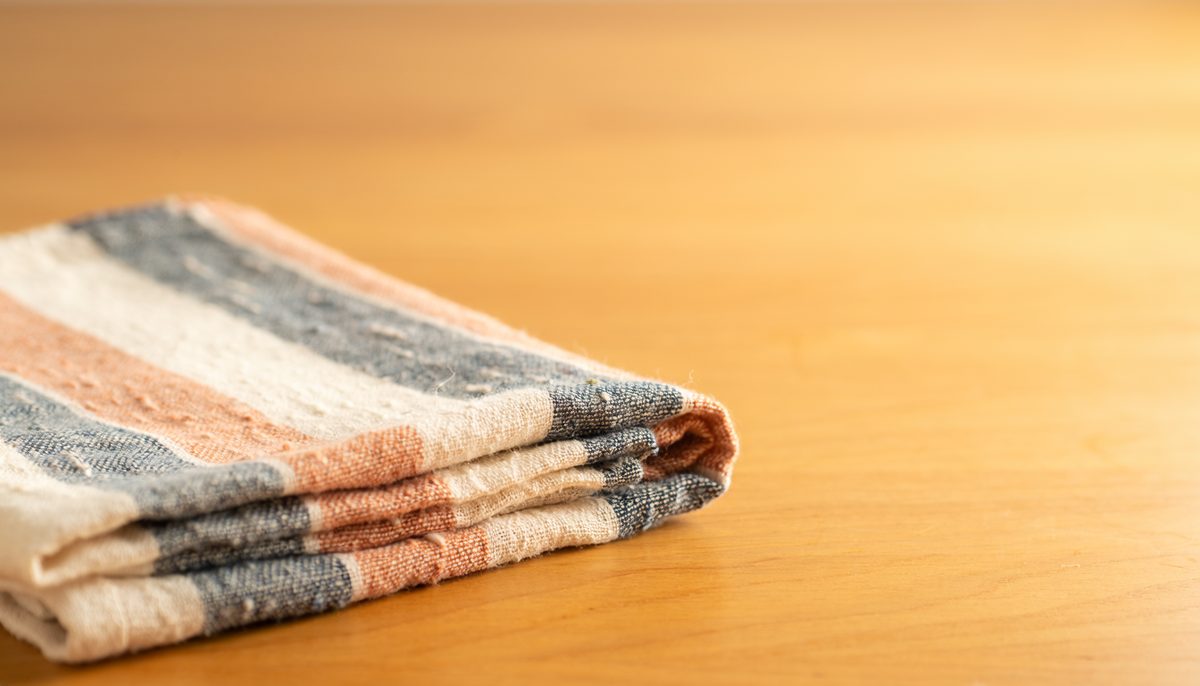
Look at the back. On many well-made weavings the reverse is as considered as the front, and the finish of the edges shows how much time went in. Feel the fiber and ask what it is. If the color is very saturated, ask whether it might bleed and how to handle the first wash.
Blown glass
A small bubble or a slight change in thickness is common in handmade glass. What deserves a careful check is the rim, especially on tumblers and pitchers, which should feel smooth. Ask whether a piece can take hot liquids rather than assuming it can.
Wood, natural fibers, and leather
Ask for the type of wood or fiber and how it was finished. If it will touch food, confirm that the finish is suitable. With leather, ask for the material to be confirmed; appearance isn't always enough.
Food safety isn't a side note
This deserves more attention than it usually gets. Some traditional ceramics use lead-based glazes. Mexico's Ministry of Economy itself describes Talavera's glaze as containing tin and lead. That doesn't make every piece dangerous, but it does mean you shouldn't assume.
The U.S. Food and Drug Administration warns that lead from improperly made pottery can leach into food, that no amount of washing or boiling removes it, and that it has found pottery from Mexico labeled "lead free" that still released lead at levels comparable to lead-glazed ware. Its advice is plain: if you can't test a piece or verify its maker, consider not using it for food. Pieces made only for display may carry a warning such as "Not for Food Use—May Poison Food." Take those at their word.
Our practical suggestion: if you're giving a piece for serving, ask for written confirmation that it's food-safe, or a lab report. If you can't get either, give it as what it also is, a decorative object, and say so on the card. A planter, a vase, or a lined fruit bowl is just as beautiful.
Five common misunderstandings
"All hand-painted blue pottery is Talavera"
It isn't. Talavera is a protected designation of origin. According to Mexico's Ministry of Economy, it covers ceramics made by tradition in San Pablo del Monte in Tlaxcala and in the judicial districts of Atlixco, Puebla, Cholula, and Tecali de Herrera in Puebla. Workshops must also be certified by the Talavera Regulatory Council to use the name. Painted ceramics from elsewhere can be excellent, but they aren't Talavera, and honest sellers won't call them that.
"If it has flaws, it's handmade"
Irregularity guarantees nothing. Nor does precision rule out handwork; some masters are remarkably exact.
"Artisanal" is a certification
On a label or an ad, the word proves nothing on its own. Formal protections exist, but they're specific. Besides Talavera, Lacas de Olinalá in Guerrero and Ámbar de Chiapas also hold designations of origin.
"More expensive means more authentic"
Price reflects many things, including where you're shopping. And a very low price isn't an innocent bargain either. It often means someone in the chain was paid little for their time.
"If it's traditional, anyone can copy it"
Not so. Mexico's federal law protecting the cultural heritage of Indigenous and Afro-Mexican peoples reserves that heritage to its communities and bars its use without free, prior, and informed consent. A community's design isn't a free print. Be wary of products that reproduce Indigenous imagery without saying where it comes from or who approved it.
Buying ethically, without the solemnity
You don't need to run an audit. A few habits are enough:
- Buy as close to the maker as you reasonably can.
- Ask for the name of the workshop or community, and use it when you give the gift.
- Haggling out of habit has a real cost on many hours of work. If the price is out of reach, choose a smaller piece from the same craft.
- Steer clear of ceremonial or religious objects unless you're sure they're made to be sold.
- Be suspicious of stories that sound too perfect. Real traceability tends to be specific and a little dull, which is a good sign.
Turning an object into a gift with a story
This is the part we enjoy most. These are suggestions, not rules:
- Start from the recipient's life. Someone who cooks every day will appreciate a piece they can use. Someone who just moved may want something for an empty wall or shelf.
- Write down what you know, and only what you know. Three lines on a card are plenty: where it was made, the technique, and why it made you think of them.
- Include the care instructions. If the clay is unglazed, say so. If the textile should be washed by hand, say that too. It's a way of giving years of use.
- Wrap it simply. Kraft paper and cotton twine let the piece take center stage. Add soft padding for anything fragile.
The short version
Ask who, where, what, and what for. Use protected names only when they apply. Verify before serving food on a piece. And on the card, say only what you can stand behind.
CAXAMIA is building its catalog slowly and has nothing for sale yet; we'd rather put these same questions to every supplier first. In the meantime, if this guide helps you choose well at your next market, it has done its job.